
Best AI Citation Tracking Tools
Citation tracking asks which pages and domains appear as sources in AI answers. A useful report lets you move from an aggregate count to the exact URL and answer that produced it.

What matters for this shortlist
- URL detail
- Preserve the full cited URL and normalize the domain separately.
- Brand distinction
- Record whether your brand appears even when another domain is cited.
- History
- Keep timestamps so removed or changed sources can be investigated.
Products to evaluate
These products are selected for the workflow described here. Their order reflects the focus of this page, not a universal performance ranking. Verify every required feature and plan in a trial.
Searcherries
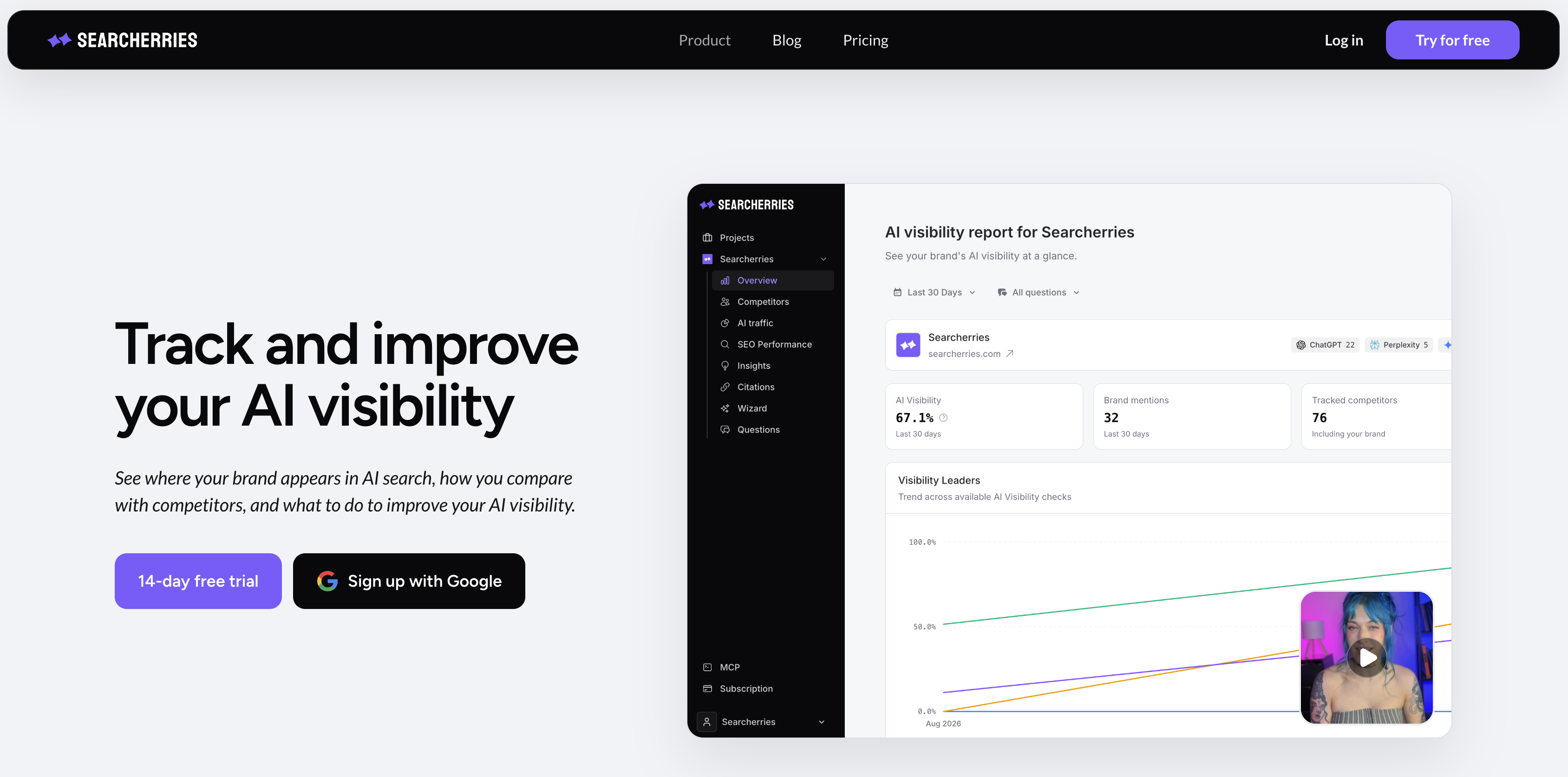
Searcherries tracks brand mentions, competitors, positions and cited URLs across major AI search platforms. Its public pages describe daily monitoring, customer-defined questions, country and language targeting, and connections to search and analytics data.
Evaluate Searcherries when you want to monitor a defined set of customer questions across selected countries and languages. Confirm that its engine coverage, reporting and project limits match your workload.
Check before buying: Confirm which engines, exports, historical data and project limits are included in your chosen plan. The public description is not a guarantee that every feature is included at every price.
Peec AI
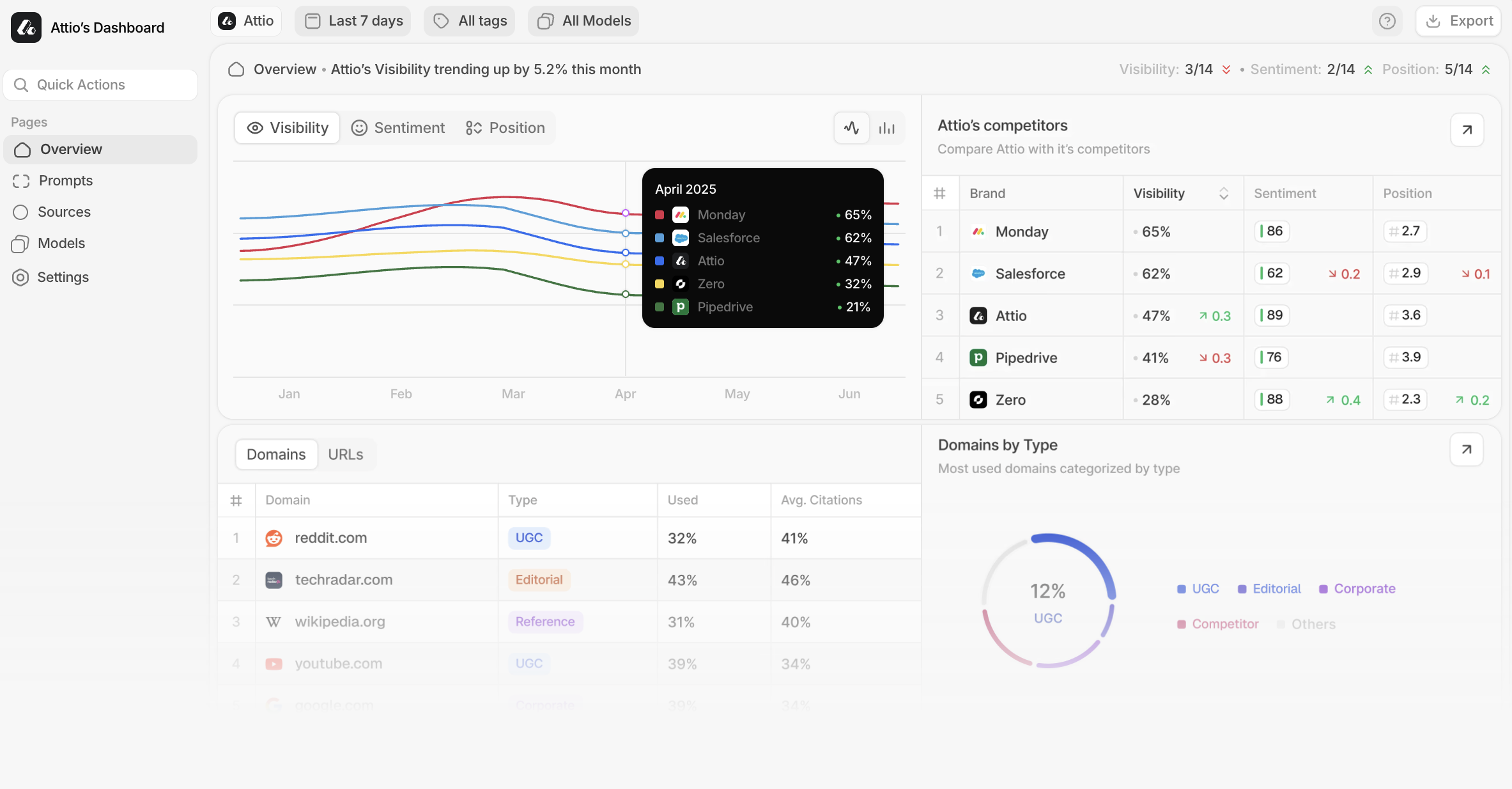
Peec AI describes visibility, position and sentiment as separate metrics. Its workflow covers custom prompts, competitor brands and citation sources; its agency material also describes client reporting and data connections.
Consider Peec when the recurring task is explaining changes across a stable prompt set. Bring a sample client report and check whether you can reproduce its topic groups, filters and underlying evidence.
Check before buying: Verify the current plan and exact engine list, API access, connector availability and retention. Test brand aliases and source exports using your own data rather than relying on a dashboard screenshot.
Compare with Searcherries Explore alternatives Official site ↗
Ahrefs Brand Radar
Ahrefs Brand Radar distinguishes a pre-collected AI visibility index from custom prompts tracked over time. The distinction matters: discovering existing mentions across a large dataset and monitoring a chosen set of buyer questions answer different questions.
Evaluate Brand Radar if your team needs to investigate unfamiliar competitors or topics as well as maintain a monitoring program. Test whether the discovery dataset covers a small brand in your category.
Check before buying: Search-derived prompt data is a proxy for demand, not a census of private AI conversations. Compare the index and custom-tracking limits separately, including which subscriptions you need.
Compare with Searcherries Explore alternatives Official site ↗
Otterly AI
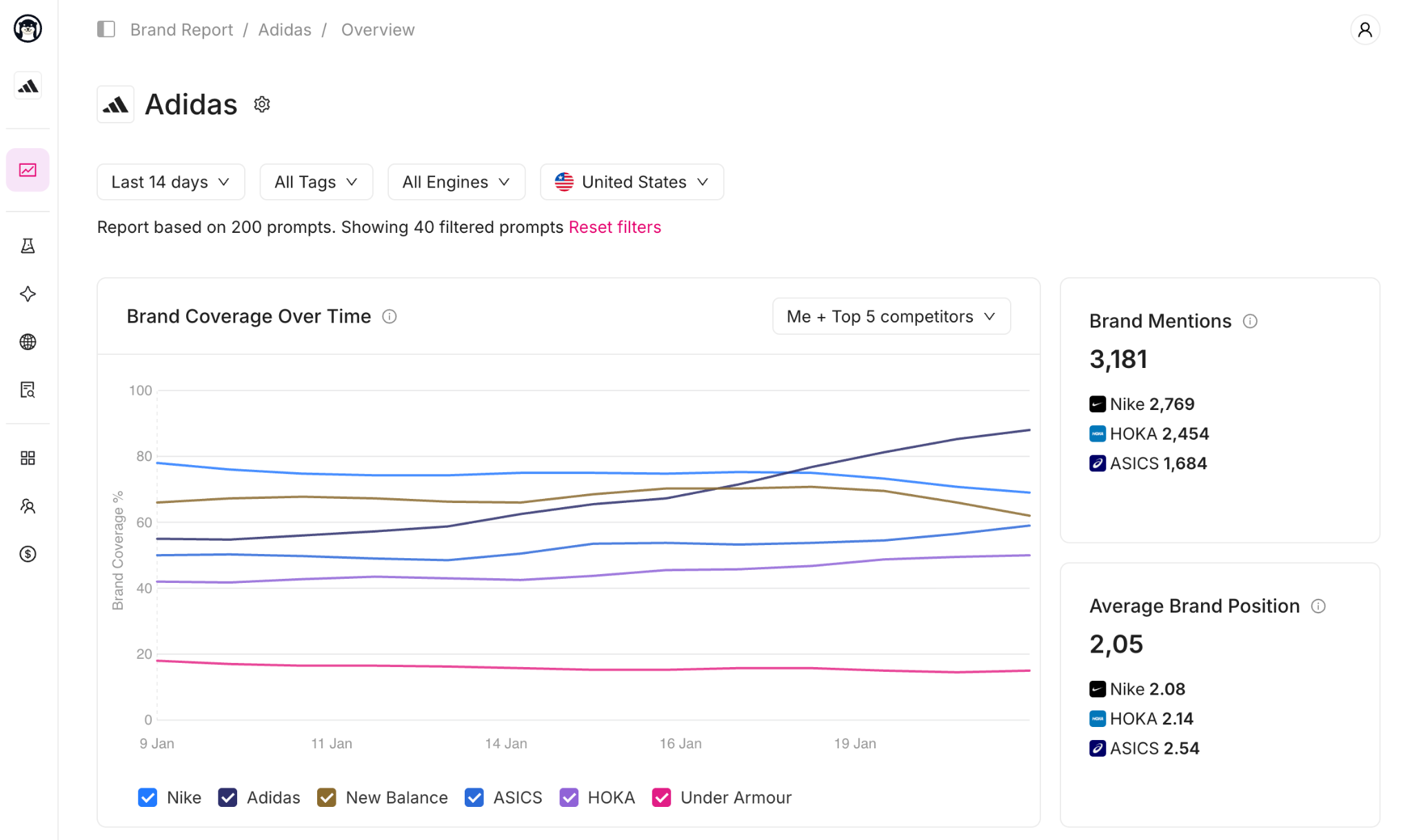
Otterly AI publishes prompt allowances and engine inclusions on its pricing page. Its documented workflow includes daily brand tracking, citation analysis and reporting, with extra engine add-ons and additional capabilities on higher plans.
Evaluate Otterly for a bounded monitoring pilot. Write down the number of questions and required engines first, then confirm the plan covers that exact workload.
Check before buying: Count engine add-ons and prompt allowances before comparing prices. In the reviewed pricing, Google AI Mode, Gemini and Claude appear as add-ons rather than part of the four-engine base list.
Compare with Searcherries Explore alternatives Official site ↗
A practical trial scenario
Illustrative evaluation task
Compare a brand named without a link, a link to its site, and a citation of a third-party review.
Save the exact input and the complete result. Have the person who will use the report inspect the evidence, reproduce one metric and identify a next action. Record missing fields, manual work and unresolved questions as part of the audit.
Tradeoffs and questions to resolve
Academic citation generators solve a different problem. Look for source extraction from observed AI answers.
Price the workload you will actually run: brands, unique questions, engines, markets, repeat frequency and reporting access. Ask whether a prompt allowance covers all selected engines or whether each collected response consumes a separate unit. Compare quotes using the same assumptions.
Sources and review context
Public product information reviewed September 6, 2026. Product descriptions are vendor claims; evaluation recommendations are editorial judgments.
- Searcherries: Product and trial information
- Searcherries: Plans and current limits
- Peec AI: Product and metrics
- Peec AI: Agency workflows
- Peec AI: Pricing
- Ahrefs Brand Radar: Product and plan structure
- Ahrefs Brand Radar: Metric definitions
- Ahrefs Brand Radar: Free checker
- Otterly AI: Pricing and coverage
- Otterly AI: Reporting connector
Continue your research
Affordable AI Visibility Tools: Compare the Real Cost
An affordable tracker covers a useful monitoring workload at a sustainable total cost. Compare prompts, engine add-ons, repeated runs and client accounts together rather than sorting only by the starting price.
Best AI Visibility Audit Tools
An AI visibility audit combines sampled answers, source analysis and checks on whether important information is accessible. Select tools for the evidence needed at each stage.
Best AI Search Competitor Analysis Tools
Competitive AI visibility analysis should show where another brand appears on the same questions you care about. Choose tools that preserve the comparison set and explain the source of a gap.
Best AI Search Prompt Research Tools
Prompt research is the work of choosing useful buyer questions. Compare how tools discover topics, explain the origin of demand estimates and let you curate a monitoring set.